Introduction
For years, millions of people have been waking up exhausted despite trying every popular sleep tip available. Long nights of tossing and turning, 3 AM wake‑ups, and groggy mornings have quietly become a normal part of life. This article explores a personal journey from chronic insomnia to deep, restorative sleep, centered around a simple 30‑second cherry‑based routine that supports the brain’s natural sleep system.
The Hidden Problem Behind Sleepless Nights
Most conventional sleep advice focuses on melatonin, sleep hygiene, and external fixes like blackout curtains, new mattresses, or tracking devices. Yet many still wake up feeling as if they never truly slept. The real issue often lies deeper, in the brain’s sleep‑pressure system – a biological mechanism driven by a molecule called adenosine, which builds during the day and signals the brain to fall into deep sleep at night. When this system breaks down due to stress, artificial light, caffeine, and modern habits, no amount of melatonin gummies or sleep apps can fully correct the problem.
A Life Slowly Falling Apart from Exhaustion
In this narrative, the author describes how sleep troubles started subtly: taking longer to fall asleep, waking up at 3 AM with a racing mind, and rising too early, unable to drift back off. Over time, the effects spread into every area of life – thick brain fog, mood swings, poor focus, and constant fatigue that no coffee could fix. Even more painful were the personal consequences: missing important family moments, struggling at work, and feeling like a ghost in his own home. The turning point came after he slept through his daughter’s championship soccer game, realizing that the problem was no longer “just being tired” but something fundamentally broken.

A Chance Discovery in the Mountains
During a forced break from work, the family took a trip to a quiet mountain cabin. Despite the perfect environment, the first night brought barely any sleep. The next morning, his wife suggested simple morning walks in bright natural light based on a sleep expert’s advice. Those early morning walks in strong mountain sunlight felt surprisingly different. After a few days of consistent exposure, he noticed that he felt genuinely awake in the daytime and, for the first time in years, fell asleep quickly and slept through the night. This experience sparked curiosity about how light interacts with the brain’s internal sleep systems.
Understanding the Sleep Pressure System
Further reading led to scientific articles explaining that natural light influences not only melatonin but also adenosine and the broader sleep‑pressure system. The brain gradually accumulates sleep pressure during the day; if this pressure reaches a healthy level, deep, restorative sleep tends to happen naturally. However, screens, late‑night blue light, stress, and stimulants can prevent this system from functioning properly, leaving the “battery” under‑charged by bedtime. As a result, people can spend eight hours in bed yet never feel truly restored in the morning.
Meeting a Sleep Researcher Friend
By coincidence, on the way home from the mountain trip, the author ran into an old high‑school friend who had become a leading sleep researcher. Intrigued by the story about sunlight and improved sleep, the researcher invited him to visit the lab. There, brain scans clearly illustrated the difference between a healthy, well‑rested brain and a sleep‑deprived brain. The latter appeared dull and underactive, similar to patterns seen in early cognitive decline. The researcher explained that when the sleep‑pressure system fails, the brain’s nightly “clean‑up crew” cannot properly clear waste, leading to chronic fatigue, memory issues, and long‑term risks.
Why Common Sleep Aids Fall Short
According to the researcher, most modern solutions only address symptoms. Strong sleep medications may knock someone unconscious but do not restore natural sleep cycles. High‑dose melatonin primarily signals darkness; it does not fix an empty sleep‑pressure “battery.” Tracking devices simply measure poor sleep without correcting the cause. The core of the problem is that the brain is no longer cycling through deep stages of sleep in the right sequence, leaving the nervous system “behind” every morning.
The Search for a Natural Reset
The researcher shared findings from a large study using a combination of natural compounds designed to support the sleep‑pressure system rather than override it. In a 90‑day protocol with over a thousand participants, average sleep scores (based on depth of sleep, REM, awakenings, and stress markers) improved dramatically. The key insight was timing and synergy: taking specific natural ingredients about 30 minutes before bed helped the brain work with, rather than against, the adenosine‑based sleep drive built up during the day.
The 30‑Second Cherry Trick Explained
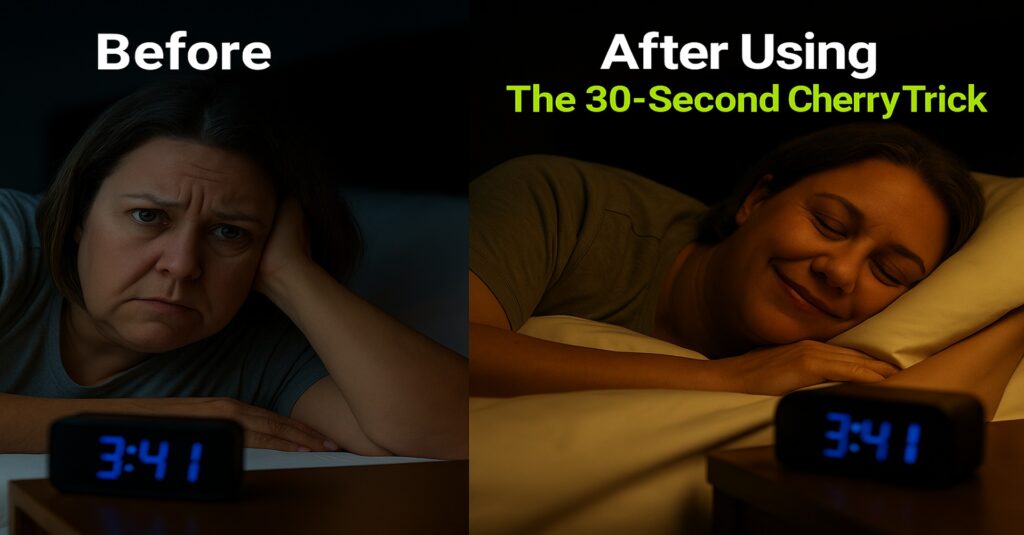
One of the most important ingredients in this approach was a concentrated form of red tart cherry extract. For years, cherries were valued mainly for antioxidants, but newer research points to their role in modulating sleep‑related pathways and supporting more continuous, uninterrupted sleep. In practical terms, the routine is simple: a small, measured amount of a properly concentrated cherry‑based preparation is taken in a quick 30‑second ritual before bed. This shortcut makes it possible to get the benefits that would otherwise require consuming a large quantity of whole cherries every night.
Real‑World Experiences and Results
The article includes testimonials from people with different backgrounds: individuals going through menopause who were waking up multiple times a night, data‑obsessed users tracking sleep with wearable devices, long‑married partners forced into separate beds due to restless nights, and busy professionals waking repeatedly to use the bathroom and then lying awake for hours. Many reported deeper sleep, fewer awakenings, less snoring, improved readiness and recovery scores, and a sense of being “truly rested” again after consistently using the cherry‑based routine.
Beyond Sleep: Life After Recovery
As the author continued the 30‑second cherry practice night after night, sleep scores rose from poor to excellent, brain fog lifted, and constant worry about lost keys, missed conversations, and mental slips faded. Weight gradually normalized as late‑night fatigue‑driven snacking decreased. Relationships improved: more patience, more presence with family, and a stronger marriage. At work, performance recovered and even led to a promotion that once seemed out of reach. Restorative sleep did not just remove exhaustion; it gave back clarity, energy, and emotional balance.
Key Takeaways for Readers
This story highlights several important ideas for anyone struggling with sleep:
- The real issue may be a weakened sleep‑pressure system, not just a lack of hours in bed.
- Chronic exposure to artificial light, stress, and stimulants can disrupt natural adenosine‑driven sleep drive.
- Natural light, especially in the morning, can help reset internal rhythms.
- A focused, 30‑second cherry‑based routine before bed may support deeper, more continuous sleep when used consistently.
Readers who recognize themselves in this journey are encouraged to look beyond quick fixes and think in terms of repairing the brain’s natural sleep architecture. With the right habits and support, even long‑term poor sleepers may be able to experience deep, effortless sleep again – without becoming dependent on harsh chemical aids and without needing to mention or rely on any branded product.